site statistics

Pages

Showing posts with label OMFGITSROHIT. Show all posts

Thursday, May 31, 2012

Casino, revisited.


This isn’t a review. This is a write-up of my experience of revisiting, after a few years, the 1995 film Casino. Contrary to its title, Casino is not one of those gambling movies. It’s a follow up to Martin Scorsese’s mafia mob drama Goodfellas.

“When you love someone, you gotta trust them. There’s no other way. You gotta give them the key to everything that’s yours. Otherwise, what’s the point? And for a while, I believe that’s the kind of love I had” says Sam ‘Ace’ Rothstein as he walks out with a cigar in his mouth and into a car that blows up. What does one make of that? Scorsese’s films rarely begin with the beginning. You’re given a glimpse of (mostly) some part of the middle. Just like how Kubrick began Lolita with its ending. By showing us where the story climaxes, our minds aren’t perched on the fate of the characters but instead on their functioning.

Sam ‘Ace’ Rothstein (Robert Deniro) heads a Casino in Las Vegas. He might be working under the title of ‘Casino Executive’ in a Casino owned by Philip Green, who exists as the squeaky clean front man under the orders of the elders of a mafia family, but Sam was the boss. The first time the camera pans into his magnificent Casino, you see it brightly lit and adorned with slot machines lined up against each other. Sam explains about the business, “We’re the only winners. The players don’t stand a chance.”

Thursday, May 3, 2012

Shame (2011)


There’s a creature. This creature is part human- part animal. The human goes to work at day, earns lucratively and lives a high-end lifestyle. At the break of dusk, this creature retreats to his den, morphing into an animal with a voracious sexual appetite and engages in a world of sexual activity. Hookers often visit, cybersex is routine and his store is filled with cartons of pornographic magazines.  This creature is Brandon, Michael Fassbender’s character in Shame.

There’s no guarantee that the beast will remain hidden inside. Even at his workplace, it possesses him unexpectedly, forcing him to masturbate in the restroom. It all works out for Brandon, who keeps his sexual feelings discreet because he doesn’t believe he has complete control over this hypersexual animal inside him. Shame suggests that something has happened in the past for him to be threatened by this inner beast.

Everything is fine until his den is invaded by an intruder, the only person Brandon has a human connection with. Brandon throws out his porn filled laptop, the magazines and the sex toys. Hookers are kept out of action.  The food supply to the sexual animal is cut off and you’ll see it is no easy task to keep it pacified.

Young Adult (2011)


It’s a brand new day. A chick flick is playing on TV but the only person in the room is sleeping on her face. She wakes up and her prominent dark circles catch your attention. Mavis is divorced and in her mid thirties. She binges on coke, ice cream and alcohol. Her social life is confined to one night stands. ‘Waverly Prep’ is the name of a young adult series she’s served as an author for. The series is nearing its end and her boss is pounding her with phone calls asking her to get done with the final edition. This unending loop of events is interrupted by an e-mail from her high-school sweetheart, Buddy. Having grown weary of her lifestyle here she decides to pay hometown a visit and get him back, since “they were meant to be together.” Buddy is a married man now, busy raising his new-born daughter.

Doesn’t it sound like a chick flick? Don’t be mistaken. It’s a personality study; one that’s presented in a darkly comic manner.

Wednesday, April 4, 2012

Another Earth (2011)


What if there was another earth with another you? What if you met this other you? Would you tell yourself what to do and what not to do? Would you save your other you? Would you ask yourself what you think of you? What would you tell yourself if you met yourself? “Better luck next time” says Brit Marling’s character in Mike Cahill’s Another Earth.

Seventeen-year old Rhoda has just received her acceptance letter from MIT. “I felt like anything was possible,” she says having just finished celebrating the occasion. She’s going out for a drive. On the radio, she learns that another earth has been spotted in the sky. She looks out. Her car swerves off course and collides with another car. She survives with minor bruises but the occupants of the other car are seriously injured, two of whom succumb to their injuries. Being a minor, she’s sent to prison for a short term of four years and her identity remains undisclosed.

Skip to four years later. Rhoda is now an emotionally remote island. Her family and she have grown apart. It’s understood that she hasn’t written to or met with them since. Probably to avoid confrontation, to avoid being faced with the knowledge of what she is missing, to avoid being reminded of her stagnant state. Making matters worse is the fact that they are all people who deal with a problem by not talking about it.

Sunday, March 25, 2012

Trust (2011)


David Schwimmer’s Trust opens with the track “Give a little” by Hanson. A teenage girl is preparing breakfast, only to follow it with her morning jog. The camera invisibly places itself on various corners of the room while it continues to scan her every move. But she has not the slightest idea. Cut to the title card “Trust”, designed in the plainest white font on a black background and let the track slowly fade away. You trust that this sets the tone for the film, a light teen drama.

Annie is celebrating her birthday with her family at a dinner table. You sense the unconditional positive regard shared. In school, Annie is merely an existence. The ‘cool’ girl invites her to a party, one that has teenagers doing the most taboo things. Annie is intimidated by their exuded sexual sophistication and returns home with a bad taste in her mouth. She tries talking to her dad about how they freaked her out but he cuts her saying that he’s busy with work. She turns to Charlie, a teenage boy with similar athletic interests. He tells her what she wants to hear. There begins their cyber relationship.

Charlie slowly reveals that he’s actually a twenty-year old sophomore. Annie lets it pass. Soon, twenty becomes twenty-five. Two months in, they meet at a mall. Charlie shows up as a middle-aged man. It deeply upsets Annie. How carefully (yet effortlessly) he coaxes her into sleeping with him from that point is disturbingly real. Deep inside she knows she’s making a mistake, one after the other but she doesn’t think such an opportunity will come again and gives in trusting that nothing will go wrong. The verbal ruses that Charlie uses to manipulate Annie... just brilliant screenwriting. Even petty comments on an ice cream flavour such as “You win, Pistachio rocks” earns her trust.

Wednesday, January 11, 2012

The Ides of March (2011)


Stephen Myers (Ryan Gosling) tells reporter Ida (Marisa Tomei) “I’m not naïve okay? I’ve worked on more campaigns than most people will have by the time they’re forty. I’m telling you, this is the one.” Stephen is a junior campaign manager for Governor Mike Morris (George Clooney), a presidential candidate competing against a Senator, Ted Pullman. Between Stephen and Morris is Paul (Philip Seymour Hoffman), Stephen’s superior and senior campaign manager. Stephen has just written a draft that Governor Mike Morris feels urged to accept. While he rides high on that, a call comes from Tom Duffy (Paul Giamatti), a rival campaign manager diametrically opposite Paul, who invites him to a political tryst and gets the ball rolling.

Stephen meets with him out of an emotional need to feel self-secure and maybe even with the intent of revamping his political career. Tom Duffy praises himself for being jaded, cynical and having the ability to turn things to his advantage. Paul, on the other hand believes that loyalty is the only currency you can count on in politics. Human errors are made but there are heavy prices to pay. Something momentous is going to happen. Bring in press reporter Ida, a scoop-hungry fiend that will pounce on anyone for it and you await the spawn of an irreparable situation.

Wednesday, January 4, 2012

Le Gamin au vélo- The Kid with a Bike (2011)


The Kid with a Bike. What if that is all it is about?

French filmmakers seem to rely on the beauty of simplicity. I’ve not seen too many French movies but I have seen enough to spot a resemblance. Their style of filmmaking is minimalistic. There’s nothing colourful about their movies. You cannot split them into physical elements (cinematography, editing, direction) and appreciate them. Neither can you single out any particular aspect for having a particularly stronger effect on you and go on about it. Their characters, normal human beings whom you can easily relate to. Their stories, earthly. Not of a man that’s caught in a sticky situation, not of the underdog that goes from rags to riches, not a twisted story that frightens yet pulls you in. There’s nothing cinematic here, no do or die.

Monday, December 12, 2011

The Station Agent (2003)


The Station Agent is about Fin (Peter Dinklage), a man with an unusually short name and an abnormally small body. He’s reminded of it at nearly every point of his life by almost everybody he meets. The little boys playing at a ground near his workplace enquire about the whereabouts of ‘Snow White’. The lady at the cash counter says something apologetic for not having seen him. A cheeky old woman grins with victory after taking a picture of him. The librarian freaks out on almost walking into him and explains that she thought the place was empty. Even the good news of inheriting a piece rural property left by a friend comes along with distasteful dessert, “You’re one of those memorable people.” And you will laugh as expected. But director Thomas Mccarthy doesn’t let the film capitalize on Fin’s short stature for laughs. He directs his actors with precision and lets them sink into the skins of the characters. You see their sadness. You see something exceptional in it and you hop on the train.

Sunday, December 4, 2011

Margin Call (2011)


Margin Call is set at a large investment bank. It begins with a firing squad walking down a long corridor, sending chills up the spines of nearby employees. Yes, people are going to get fired. Head of sales, Sam Rogers (Kevin Spacey) explains “It’s going to get worse before it gets better.” Among the many terminated is Eric Dale (Stanley Tucci), a high ranking employee in risk management. He insists on finishing up with his final report but his boss reminds him that it doesn’t concern him anymore. His protégé, Peter Sullivan (Zachary Quinto) escorts him to the lift where he hands over the responsibility of completing the final report and says “Be careful.” Before Sullivan can react the elevator closes. Later that night, on finishing the report, Peter Sullivan predicts an economic meltdown. Everyone’s going down. “Look at all these people; they don’t have the slightest idea about what’s about to happen,” he remarks.

Thursday, October 20, 2011

Six Feet Under (2001-2005)


When I told people to check out the series, ‘Six Feet Under’, they all asked the same question- “What is it about?” I had no answer, so I said “Just watch it.” A number of possible answers came to mind but none of them could accurately represent what the series was really about. When I finished it, I found the correct answer to the question- Life and Death. That is what Six Feet under is about. It’s funny I didn’t get the answer before. The celestial opening theme suggests just that. It seemed apt for the series but I never asked what about it made it apt.

Six Feet Under revolves around a funeral home, Fisher & Sons. Every episode begins with introducing new characters, one of which contributes to the family business by, well, dying. The deaths fade to white, instead of black, because it is these deaths that fuel the fisher family, and the series. Ironically, the pilot episode begins with the death of Nathaniel Fisher, the patriarch of the family and the owner of the business. His younger son, David, plays by the book and makes funeral arrangements for his father while battling with his own sense of shock. His elder brother, Nate, is an extreme libertarian. He continuously grunts at the subdued way with which people choose to grieve. The youngest, Claire, complies with indifference. Their mother, Ruth, drowned by ambivalent feelings confesses that she’s been having an affair with her hair dresser. This episode establishes clearly the personalities of the Fisher family. How they progress or regress, you will see for yourself.

Wednesday, October 12, 2011

Drive (2011) - Review/ Analysis/ Interpretation/ Spoilers


After the pulsating ten minute heist (ending with Ryan Gosling almost going face to face with a cop to ooze ‘cool’) comes the title sequence in pink font with electro house music playing in the background. I don’t know why but something about it told me the film was set in the late eighties. Now, I’m expecting Drive to plunge into the darkness of neo-noir with Driver being the hero, as opposed to, a character. But then, the stoic Driver flashes an effeminate smile and descends into a montage that is, set near a pond and guided by a pop track with lyrics like “A real hero, a real human being”. Now, I’m embarrassed. I’m skeptical about how this is going to turn out. Seriously, what the heck is this kind of music doing in a neo-noir? This is just what I’d expect to see in a chick flick or a daytime TV movie. It only gets worse when you have to play spectator to the awkward stares shared between Driver and Irene (Carey Mulligan). Watch the film a second time and you’ll see these scenes exist for characterization purposes.

When I first saw the trailer for Drive, I was expecting an action film and a charismatic Ryan Gosling. That’s how the movie presented itself to be. If you’ve seen the trailer, you know the film’s plot. However, the film isn’t plot centric. It has action, crime and it is fairly dark but I’d categorize it as a character study. With very little dialogue, Nicolas Winding Refn has managed to vividly characterize his players.

Tuesday, September 27, 2011

Dogtooth (2010)


“Mama, can you pass me the phone?” asks the girl. Her mom quietly passes the salt shaker and they continue with their dinner as if this was routine procedure. You're the odd one out. This is when you start wondering if there is something wrong with the family sitting at the table. Delve deeper and you’ll realize that everything’s wrong with it.

This is a family whose functioning is determined by the twisted minds of the heads of the household. The oligarchs have reared their children in this house since birth. Their three subjects (now in their late teens) haven’t dared to step beyond the compound gate. The outside world (so they’ve been told) is populated with carnivorous cats (which they are trained to bark at) and its ground intends to consume anyone who sets foot on it. Their father drives out to work. They watch the gate slowly closing itself behind him. They will have their day, they believe. But they must wait until their dogtooth falls off. While they wait for that day to come, they let time pass by watching home-recorded movies, consuming anesthetics and positioning themselves correctly to catch overhead airplanes.

Wednesday, July 13, 2011

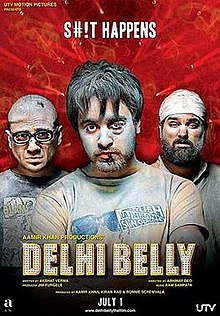
Delhi Belly (2011)


Watching Delhi Belly is like smelling aftershave lotion. The first time you do, you like it but then it evaporates. That’s how volatile Delhi Belly is; its effect wears off in no time. Every joke works because of its inherently unpredictable nature and that is precisely why the film doesn't warrant a second viewing. You remember scenes from the film much more than the film itself. It has all the ingredients of a no-brainer - bare characterization, average acting and silly gags. Serving no purpose other than popcorn escapism, Delhi Belly is entertainment served on a silver platter. Just be sure to leave your brains behind.

Rating - 6/10

Sunday, July 10, 2011

Antichrist (2009)


He (Williem Defoe) and She (Charlotte Gainsbourg) are having wild sex. They’re doing it against the bathroom wall, against the washing machine, on the floor, on the bed sincerely letting delicate objects in the proximity, topple over and break. Meanwhile, their little son is just getting out of his cradle with his eyes on the falling snow outside and climbs onto the table beside the window. Her eyes are on the boy but having been penetrated with full force for the last few minutes, she’s on the verge of climax. To the orgasm she succumbs, letting her beloved infant roll over and fall head first onto the curb. Here, ends the prologue.

The event described above doesn’t end there. The aftermath is one with complex ramifications. He expresses grief over the loss of his child and chooses to move on. She feels grief accompanied by guilt. She saw it happen and believes that she could’ve chosen other than her own sexual gratification. A month’s stay at the hospital hasn’t improved her condition. The doctor calls She’s grief atypical. She’s husband, He, a psychologist believes he has the ability to treat her without medication. In principle, He agrees with the doctor that a psychologist shouldn’t treat his own family but in this case, He doesn’t think another psychologist could know her better than he does. Thus embarks their psychotherapeutic journey. He keeps his relationship with She on a professional level letting her deal with her grief alone. When she needs a husband to grieve with over the death of their child, He chooses to escape from his own grief by diverting his attention to his work, with She being the object of dissection, irregardless of her own skepticism toward psychotherapy. What happened to helping you help yourself?

Saturday, June 18, 2011

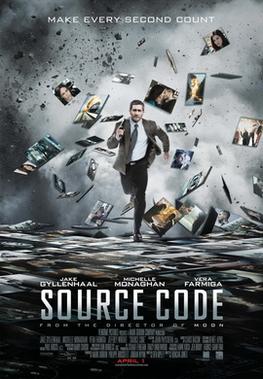
Source Code (2011)


Source code is a tightrope walked by Jake Gylenhaal and held on either ends by screenwriter, Ben Ripley and director, Duncan Jones. Jake Gylenhaal walks it with utmost sincerity yet he wobbles because Ripley and Duncan Jones are pushing him and our patience too hard. He never falls and you sit there hoping he makes it but you come to realize that it was all staged. A gimmick like this doesn't warrant a second viewing.

Colter Stevens (Jake Gylenhaal) wakes up to find himself on a train talking to Christina (Michelle Monaghan), a woman he’s never met. As flustered as he is, he goes in to the toilet to figure things out only to find a face he doesn’t recognize in the mirror. Eight minutes later, the train is blown to smithereens and he’s transported to a secret laboratory. Apparently, he’s been employed by Goodwin (Vera Farmiga), the commanding officer of an army of scientists who repeatedly transport him back (only virtually) for the last eight minutes of the explosion with the hope that he’d help in tracking down, the terrorist involved, and prevent another scheduled explosion. Every time he’s transported back he becomes increasingly callous and desperate, using violence to find what he needs. I loved this part. It’s nice to hurt someone and not have to live through the consequences because after all, it’s an alternate reality. Unfortunately, he seems more interested in finding out about his employers and trying to prevent the explosion even when he’s aware that he isn’t really changing the past. This is where the film begins to falter.

Stevens is constantly told by Goodwin to focus on his mission. I wish the filmmakers did the same. The film ends up fluctuating between finding the terrorist and flirtatious conversations between Stevens and Goodwin (who conveniently turns from a hard ass to a humane do-gooder); and once in a while, his eight-minute built love for Christina. They could've stuck to just finding the terrorist by replaying the events, focused on the characters and kept us guessing. That’s precisely why Groundhog Day worked, with the laughs. But no, they’re clear with their intentions. They want to make money, a lot of it and they won’t compromise on that. Source code was hinged on structure at first, and then it shifted to the relationships of poorly written characters. I understand that there isn't enough room for characterization, but why take on more than you can handle?

The first half was constantly energetic while the second half steadily lost tempo. Another problem with source code is giving us its source code. It’s a science fiction; no one’s going to question it. We just suck it up. I don’t remember anyone asking about the how’s of Inception. They just asked where? Where does it end? That of course, was a word-of-mouth marketing trick. Source Code thinks it has ended on an intelligent note but it isn't smart enough to know that it doesn't.

Rating – 6/10

Tuesday, June 7, 2011

The Hangover Part II (2011)


Shallow. Dark. Unrealistic. Ribald. Hilarious. These five words encapsulate The Hangover Part two. The words shallow and unrealistic stand out to me. So the film didn’t really work for me. To those of you whom the words ribald and hilarious stand out, I recommend the film.

I find it hard to turn off my brain before watching a no-brainer. I am bombarded with questions regarding the plausibility of the film’s events. With The Hangover Part Two, each time I threw a question, it softly bounced off the screen; but I didn’t care. I was too engrossed in what was happening to even remember what it was that I wanted an answer to. The film switched off my brain. Starting from the same point as the prequel and ending at pretty much the same point, the film takes a similar journey, different in the number of bumps it encounters and the catastrophic nature of each. The screenplay is packed with dull dialogue but it tries mighty hard to torture its characters and awakens the sadist within us. Whether it is a moron getting sodomized by a tranny, a fingerless teenager being stuffed into a refrigerator or the ebbing pulse of a crack addict, we grin with pleasure. There’re extremely horrible parts but they’re so uncompromisingly horrible that you’re left in stitches. Well, that’s that. Now, I’ll tell you why it didn’t work for me. I expect a film to have decent characterization, developed relationships and fairly good acting. The Hangover Part Two doesn’t have any of these. Ed Helms is effective at displaying high-strung emotions but that’s about it. Zach Galifianakis, who delivered his best performance with a cameo appearance in Up in the Air, is more of an unnecessary appendage than those of the transexuals in the film. The Hangover Part two’s saving grace is Mike Tyson. It isn’t a feat to be proud of, though. Even as the credits roll, you’re sitting there watching a montage of still photos; not because you care about the characters but because you can’t get enough of seeing them suffer.

Rating- 5/10

Wednesday, May 25, 2011

Dead Loops (2011)

I don’t consider myself to be a music critic. A film critic, yes very much but not a music critic. I choose to review Dead Loops because it has had a profound effect on me. The pent up energy instilled in me has to be let out and I will channelize it with this review.

I thoroughly enjoyed listening to Snakeism. I couldn’t care enough to pay attention to it and that was because listening to it without the lyrics was already very satisfying. When Dead Loops came out, I just had to check it out and I did, again without the lyrics. It wasn’t satisfying. Why? It never attempts to catch your attention; it believes it deserves your attention. I couldn’t form my verdict without giving it a fair shot and eventually I did listen to it with the lyrics. It was a depressing experience. With every song, I felt like I was being slowly lowered into a deep dark empty well. As soon as I hit the bottom, I was told to take the risk and ‘Rise Above’ by myself. Adam and the fish eyed poets kept raising similar questions that some part deep down inside me wanted to ask but didn’t seek the answers out of fear of having to deal with them. And then, it answered them too short and too quick. It was an unsatisfying answer. I was angry. I was unprepared. I felt let down. I was pushed out of my comfort zone. And those were just the artist’s intentions. I eventually got to it again with the hope that I will get the answers. The answer was to seek an answer by MYSELF, not wait for circumstances to give me one.

Two days later, I was awakened at five in the morning by ‘suicide girl’ playing in my head. It wasn’t just the song that lingered but the feeling it evoked. I could feel the character’s sense of loss. I listened to Snakeism again and this time with the lyrics. Snakeism is deep but you’re given the liberty to glide through the surface. Dead loops refuses to be taken for granted. You’ve got to work your way through it. Characters with contradictory thoughts and conflicting ideas fascinate Kishore Krishna. If the song isn’t his rant against a society that kills the individual spirit, it’s mostly the experiences of these characters silently at war with themselves. These characters, I believe, if connected the right way are part of a common world. Dead Loops’ intensity and Kishore’s self-expressive honesty are what make it a poignant work of art.

You can listen to it here- http://adamandthefisheyedpoets.bandcamp.com/album/dead-loops

Friday, May 20, 2011

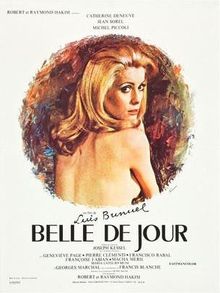
Belle De Jour (1967)

23 year-old Severine (Catherine Deneuve) has been married to her soft, sensitive husband Pierre for a year but their sex-life is in limbo. Pierre is a doctor with compassionate looks while Severine, on the other hand has repressed her sexuality because she’s afraid of sex. Being a woman of self-defeating behaviour, she’s drowned by masochistic fantasies. Her own physical pain is mental pleasure. All her fantasies end up with her being abused and feeling worthless. The more she wants her husband to demand sex as if it were his right, the more he requests her for it, followed by an apology when declined.

When she learns that a friend of hers is a sex-worker (a profession she didn’t think still existed), she fails to understand why or how anyone would be able to have sex with a stranger (“You don’t get to pick”) and asks around but they all explain the business like it didn’t need an explanation, in brief. She still doesn’t understand it. It isn't long before these unanswered thoughts translate to action. Inquisitiveness builds and eventually overpowers her making her enroll at a whorehouse as a sex worker.

The sound design is the viewer’s map. If you want to understand the film, looking carefully isn't enough; you must listen carefully. Every sound in every scene has significance. If you perceive the film in a “what you see is what you get” way, the film will make no sense. You have to make sense out of it. In spite of that, the film has no background score. That’s because the film doesn't intend to stimulate the heart. It’s your mind that will be stimulated.

Nor does it intend to stimulate the prostate gland. Severine is elegant and attractive in an aristocratic way. You’re tempted all along to see her nude but this is no porno; the film’s focus is on the self-destructive thoughts swimming inside her head. That explains the absence of frontal nudity. The director, Luis Bunuel knows her beautiful body would serve no other purpose than being a distraction.

Catherine Deneuve delivers a perversely innate performance. Her act doesn’t communicate as much through her face muscles as it does through her eyes. It’s a subtle performance of restrained power.

Belle De Jour is art at its purest form. The biggest risk it takes is in not providing explanations. Doing that would just take away subjectivity from the film and art is subjective. The first watch raises the questions and it’s up to you to look for the answers with multiple viewings. This is precisely why it isn’t a film for everyone. You won’t be satisfied after the first watch but with repeated watches, you’ll be glad that the film raises more questions than it answers. With Belle De Jour, Luis Bunuel has taken surrealism to its pinnacle. This is no erotic thriller and I don’t recommend it to anyone who doesn’t enjoy intellectually stimulating films; because, Belle De Jour is a cerebral work out.

I’ve watched it thrice and all three interpretations of mine are considerably different. It isn’t one of those films with simply ambiguous binary endings- answer A or answer B? It’s not just open-ended, it’s open all the way. It’s a maze; you start somewhere and you always think you’ve made your way out but its path is one that you choose.

After you watch the film, you’re going to ask two questions-

1) What is real?

2) What is fantasy?

It’s whatever you want it to be.

Rating – 10/10, added to Great Movies.

Sunday, May 15, 2011

All Good Things (2010)


All Good Things is based on the true story of a real estate mogul accused of three murders but let off the hook. David Marks (Ryan Gosling) watched his mother jump off the roof and “crack her skull like a walnut.” He hid under a table for a week. When he came out, it was as if it never happened. In spite of therapy, the feeling associated with the memory doesn’t change and the issue remains unresolved. Adding fuel to the fire is his overbearing father (Frank Langella) who needles at his conscience for not being as involved as he’s expected to be in the family affairs and often reminds him of his scrounger status. Ultimately, David falls prey to the manipulation and joins his father’s real estate firm. I can’t go on in this direction because this is where the mystery starts.

What I will tell you is that this is a first-rate murder mystery. I understand why most critics panned the film though. They wanted a satisfactory explanation. But there isn’t one. The film’s director Andrew Jarecki has simply taken all the facts from the case and presented them in just that manner. The film is based on facts, facts that are inconclusive. No one really knows what happened which is why David wasn’t convicted. Based on what Jarecki’s heard on the characters involved, he tells the story and lets you decide whether David is guilty or innocent.

The obvious characterization is excusable because this isn’t a character drama it’s a thriller. Kirsten Dunst excels as Katie Marks, David’s love interest. Nevertheless, the film stays on David and his struggle with the voices screaming in his head. You don’t hear them but you see the conflict on the actor’s face in every frame. Gosling is ticking dynamite. It’s a performance of repressed intensity. Each and every time he makes an appearance, you hold your breath expecting him to explode. You never know when, but you know it will happen. However, it isn’t just the actor who brings forth the character. The cinematography and the score have nakedly exposed the character’s mind- his fears, his urges, his angst. Its synergy is what makes All Good Things a triumph of ambience.

Rating – 8/10

Tuesday, May 3, 2011

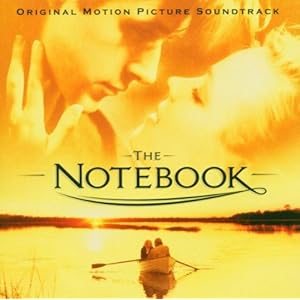
The Notebook (2005)

Ryan Gosling is probably the best actor of his generation- The Believer, Half Nelson, Lars and the real girl, Stay and Blue Valentine. Seriously, what a brilliant character actor! There was no way I wasn’t going to check out The Notebook.

The Notebook opens with a senile woman looking out of a window with a dazed expression in her eyes. The window of a nursing home that keeps the place alive by allowing old men to read out to old women. One old man reads out to an old woman a love story between a Noah and an Allie. If you want to know anything about the story, you’ll have to watch the film. Wait a minute. Did I just say that? No, don’t watch the film. It’s a dreamy, sugary chick flick that is so down and out that even the luminous performances of Ryan Gosling and Rachel McAdams don’t elevate it. Despite the characters being shallow caricatures, the actors manage to breathe life into them. I don’t know you and I don’t know what you do but whatever it is, Nick Cassavetes’ The Notebook is a big waste of your time.

Rating – 4/10

Large Association of Movie Blogs